
About Acoustic Family Therapy

Bring Me What Happened Tuesday at Nine
In the first ten minutes, you will notice I am not taking notes on a clipboard or nodding along while I wait for my turn. I ask about specifics: what happened Tuesday at nine, who said what, and where you felt it in your body when they said it. Vague questions produce vague answers, and vague answers do not change anything.
Expect me to slow you down, too. By the time you arrive, you have probably told the story of your problem many times, to friends, to a previous therapist, to yourself at three in the morning, and the telling has become smooth. My job is often to stop the telling and ask what is happening right now, in this conversation, because that is where the pattern is actually running rather than being described.
Sessions happen on video with adults and couples anywhere in California, and the practice is based in Claremont. You open your laptop and we begin.


Let Your Body Have a Say
Much of what I do is body-based. In practice, that means I will interrupt an articulate explanation to ask what just happened in your chest.
Change tends to happen below the level of language, and the people who come to see me are usually very good with language. That skill has often become the thing standing in the way.
Some clients work with film, video, and image. For people whose insight has outpaced their relief, making something they can look at often moves what talking about it has not.
See the Shape of Your Fights
Whoever is right about the dishwasher, my attention is on the loop the two of you run: what you do, what your partner does in response, and what you do next because of that. Most couples can describe the content of their fights in detail and have never seen the shape of them.
Individual sessions run fifty minutes. Couples sessions run seventy-five, which is longer than standard, and there is a reason for it. A fifty-minute couples session gets a couple activated and then sends them back into the same house with nowhere to put it. The extra twenty-five minutes exist so we can finish what we open.
Start Catching Your Pattern in Real Time
The first session is for finding out what is actually going on, which is frequently not the thing you booked about. By a month or two in, most people can name the pattern while it is happening rather than three days later. Clients often describe the shift as going from managing something to understanding it.
A small caseload is a deliberate choice, so I remember what you told me a couple of months ago. Research on common factors keeps pointing to the same finding: the relationship between therapist and client shapes outcome more than any single technique. I practice as though that finding is true, because it is.

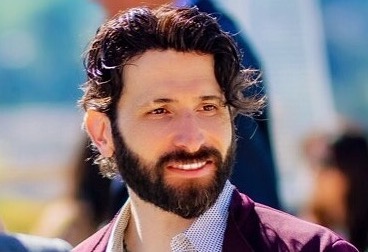
About Mohammad Shahisaman, PhD, LMFT
For years, I was an academic dean, and before that a musician who cared more about what happens in an improvisation than almost anything else. Those years run straight through the clinical work, and they are the reason I notice timing, phrasing, and what someone is doing in the silence.
I was born in Iran and came to the United States as a child in elementary school. I know the particular arithmetic of a family that gave something up so you could have something else, and what it costs to feel ungrateful for the thing you were given. When a client from an immigrant family starts explaining their culture to me, I usually already know the shape of it, and we can skip ahead.
My PhD in Marriage and Family Therapy is from Alliant International University, where my dissertation examined filmmaking as a clinical intervention, and I am a Licensed Marriage and Family Therapist in California. I teach graduate clinical courses in Alliant’s MFT program. Before this I directed the mental health track at a residential treatment program, which is where I learned what the hardest version of a problem looks like and how much is still possible after it. My training is in emotionally focused work with couples, body-based and somatic approaches, trauma treatment, and ketamine-assisted psychotherapy through Journey Clinical.
Outside of work I play guitar, badly and often. There is one within reach of where I am sitting right now. I love to discuss a top five list of anything, and I will take it more seriously than the situation warrants.
Tell Me What Is Going On
Book a free 15-minute consultation and tell me what is going on. We will figure out together whether I am the right person for it, and if I am not, I will tell you who might be.
Start with 15 Minutes on the Phone
Before you commit to anything, you tell me roughly what is going on. I ask a few questions. Then I tell you honestly what I think, including whether I am the right person for it.
If I am not, I will try to point you toward someone who is, and I would rather do that in fifteen minutes than in six weeks. You are also interviewing me.
We will talk about what is not moving, and what it would take to move it.